How several species have been protected.
Recovery Success Stories—It is also important to emphasize the “good news,” the success stories of the Endangered Species Act and species recovery. Since it was established, the Endangered Species Act has kept an estimated 227 species from potentially going extinct, from 1973-2004. Of the approximately 1,800 species ever listed under the Act, only nine have been declared extinct—a 99 percent save rate. Here are four good examples of species recovery:
*Bald Eagle: The bald eagle was once on the brink of extinction due to habitat loss and the use of pesticides such as DDT. In 1963 there were less than 500 breeding pairs in the lower 48 states. The bald eagle recovered very well in the years following the ban on domestic use of DDT in 1972.

Nevertheless, the passage of the Endangered Species Act in 1973 led to the eagle being listed as endangered in 1976. Since that time, the eagle has benefited greatly from that protection and was reclassified from Endangered to Threatened in 1995. It has since recovered sufficiently that it was de-listed entirely on June 28th, 2007.
*Peregrine Falcon: Once listed as Endangered, the peregrine falcon population has increased in response to reintroduction and habitat protection, as well as the elimination of other threats such as pesticide use.

There are currently an estimated 1,650 breeding pairs in North America. The peregrine falcon is found on every continent except Antarctica and lives in a variety of habitats.
*Sea Turtle: All seven species of marine sea turtles are listed as either threatened or endangered, in part due to the enormous level of capture by shrimp trawlers in the Gulf of Mexico and Atlantic oceans.

Through the enactment of regulations to protect sea turtles including the protection of nesting beaches and mandatory installation of turtle excluder devices on shrimp boats, there has been a steady increase in annual nest counts of most species.
*Southern Sea Otter: Recognized as an umbrella species for the conservation of California’s near-shore coastal ecosystem, the southern sea otter was listed as threatened with the federal Endangered Species Act in 1977. Its population once numbered over a million but was hunted to near extinction by the fur trade.

Due to the Act’s protection, sea otter members greatly increased. Although it is considered one of the best marine conservation success stories, the otter remains listed as Threatened, because some of its population numbers have plateaued or declined. There are now about 2,800 otters on the California Coast.
Additional Successes (From the National Wildlife Federation)
*Florida Panther: A 1989 census indicated that the Florida panther population had dropped to between 30 to 50 individuals. This decline was the result of habitat loss, degradation and fragmentation.

Today, the species population is still below 250 individuals, but without Endangered Species Act protections the panther would likely be extinct. These protections include captive breeding, habitat protection, wildlife underpass construction and the introduction of Texas cougars to prevent inbreeding.
*Gray Wolf: Gray wolves once ranged across the entire North American continent. However, as a result of poisoning and trapping by ranchers, farmers, and government agents, by the mid-20th century only a few hundred of the species remained in the entire lower 48 states.
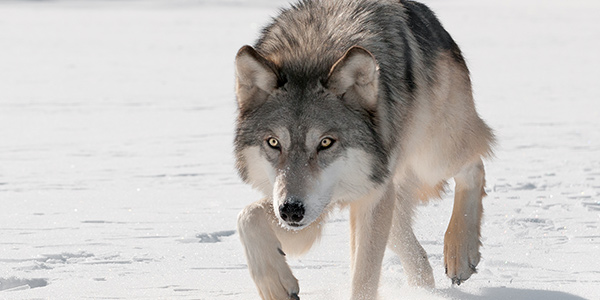
Today, thanks to Endangered Species Act protections, more than 6,000 gray wolves reside across the lower 48 states. The gray wolf’s success is a result of stimulated efforts such as public education about the species, habitat restoration, wolf introduction into various areas, and compensation of ranchers for livestock killed by wolves.
*Grizzly Bear: Within the lower 48 states, grizzly bear populations have been reduced to a mere two percent of their former range due to a combination of excessive hunting, conversion of habitat to human uses and fragmentation of habitat caused by such things as extensive networks of logging roads. Grizzly bears were brought under federal management when they were listed under the Endangered Species Act in 1975. At that time fewer than 250 bears occupied the Yellowstone area.

Since then, the coordinated efforts of state and federal agencies, conservation organizations and private citizens have increased this population to more than 700 bears. In total, an estimated 1,400 to 1,800 bears occupy habitat in the lower 48 states, including portions of Glacier National Park and adjacent areas in Montana and in northern Washington adjacent to the Canadian border.
*Red-Cockaded Woodpecker: In the 1960s, a study predicted that the red-cockaded woodpecker would become extinct due to logging, deforestation and fire suppression. Fewer than 15,000 of these birds survive in about one percent of its former range.

Thanks to the Act, restrictions were placed on habitat destruction and since 1995, more than 2.5 million acres of private lands have been enrolled in conservation programs, leading the woodpecker toward recovery.
*You can find information on success stories of species recovery (including a state-by state listing) at: http://www.esasuccess.org/and http://www.fws.gov/endangered/map
***
 The Endangered Species Conservation Site
Terrific write-up. I was verifying regularly this particular blog page that i’m fascinated! Very useful information and facts specially the ending piece 🙂 My spouse and i retain such facts a whole lot. I had been trying to find this type of data for a long time. Many thanks and best with luck.